
The short answer: some of the weight you lose on a GLP-1 will be lean mass, and that is true of any significant weight loss, with or without medication. Three habits protect your muscle: eating enough protein, doing resistance training two or three times a week, and pacing the medication so the weight doesn't come off faster than your body can adapt. Get those right and most of what you lose will be fat.
This question comes up in almost every weight loss consult we do, and it should. The scale can't tell you what you're losing. Here is what the trial data actually measured, and what we do about it in our program.
Does a GLP-1 cause muscle loss? What the trials measured
The honest starting point is the body-composition substudies inside the big clinical trials. A subset of participants got DEXA scans, the same scan used to measure bone density, before and after treatment. So we know what the lost weight was made of.
In the STEP 1 trial of semaglutide, substudy participants lost 15 percent of their body weight over 68 weeks. Fat mass dropped 19.3 percent, and visceral fat, the kind packed around your organs, dropped 27.4 percent. Lean mass dropped 9.7 percent. Because fat fell so much faster than lean tissue, lean mass as a share of total body weight actually improved by about 3 percentage points.
The SURMOUNT-1 substudy of tirzepatide ran 72 weeks and found the same pattern at a larger scale: 21.3 percent of body weight lost, with fat mass down 33.9 percent and lean mass down 10.9 percent. Roughly 75 percent of the weight lost was fat and 25 percent was lean tissue. Here is the detail most articles skip: the placebo group, losing weight through lifestyle changes alone, lost it in almost exactly the same ratio.
So the medication itself isn't uniquely hard on muscle. Losing a lot of weight is hard on muscle, however you manage to do it. A GLP-1 simply makes that scale of loss possible for people it never was before, which is exactly why the muscle question deserves a plan from day one. (Still comparing the two medications? We covered what's actually different about tirzepatide separately.)
Why lean mass is worth protecting
Muscle burns calories at rest. Lose it and your resting metabolic rate drops, which makes keeping the weight off harder than it needs to be. Muscle is also the tissue that gets you up the stairs, off the floor, and through a Minnesota winter of shoveling. And past 40, rebuilding lost muscle gets genuinely difficult, which is why age-related muscle loss has its own medical name: sarcopenia.
Then there's the regain problem. If you lose muscle along with fat, stop the medication, and regain weight without training, the regain is mostly fat. You can land back at your old weight with worse body composition than you started with. That is the outcome this whole article exists to prevent.
Protein: the target and the real problem
The general guidance during active weight loss is 1.2 to 1.6 grams of protein per kilogram of body weight per day. For a 200-pound person, that works out to roughly 110 to 145 grams. We set your personal target at your consult, because the right number depends on your labs and your starting point.
Knowing the number is easy. Hitting it on a medication designed to shrink your appetite is the actual problem. When you're only hungry for a few small meals a day, protein has to come first at every one of them: eggs, Greek yogurt, cottage cheese, chicken thighs, salmon, before anything else on the plate.
The rough weeks matter most. When nausea shows up after a dose change, protein is usually the first thing to collapse, and a week of almost no protein is a week your body pulls from muscle. A protein shake isn't cheating on those days. If a supplement makes sense for you, we'll point you to one we trust through our online dispensary instead of leaving you to guess in the supplement aisle.
Strength training: the part you can't skip
Protein gives your body the raw material to keep muscle. Training gives it the reason. Without some kind of resistance work, extra protein only does part of the job, because your body won't maintain tissue it isn't being asked to use.
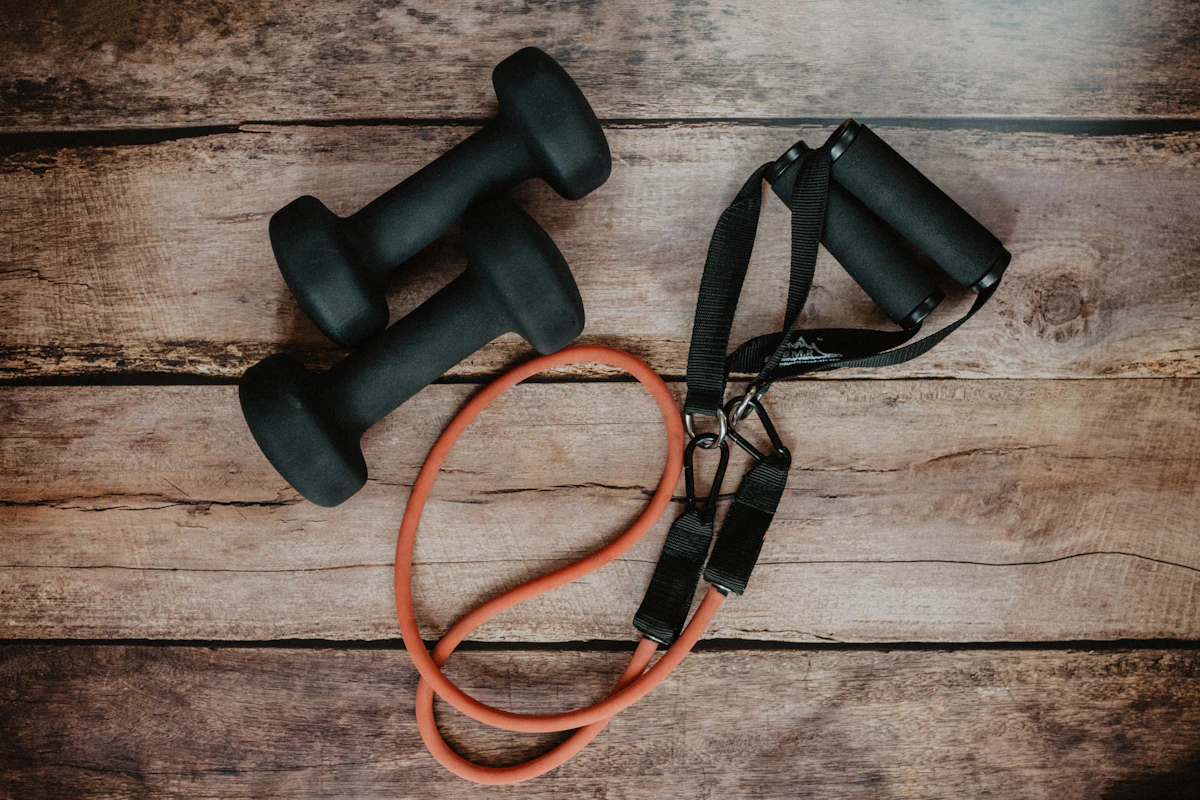
Two or three sessions a week is enough. It doesn't require a gym membership: a pair of dumbbells in the living room, resistance bands, or bodyweight work like squats, push-ups, and step-ups will do it. What matters is that it gets gradually harder over time. Another rep this week, a slightly heavier weight next month.
Walking is great for almost everything else. It just doesn't preserve muscle on its own.
Losing weight too fast is the hidden risk
This is the lever almost nobody writes about. The faster the weight comes off, the more of it tends to be lean tissue, and the worse the side effects that keep you from eating well. A dose that has you dropping weight quickly while too nauseated to eat protein is working against you, even though the scale looks great.
It's why we don't run doses up on a fixed schedule. Between visits we watch a few specific things:
- Rate of loss: steady beats dramatic. A pace your body can adapt to keeps the losses tilted toward fat.
- Side effects: nausea that stops you from hitting your protein target is a dosing problem, not a toughness test.
- Strength: if your usual weights suddenly feel heavy, we want to hear about it.
Sometimes that means holding a dose steady for an extra month on purpose, and we'll tell you when and why. Your baseline labs set the reference point for those calls. We would rather see you lose 40 pounds of mostly fat over a year than 40 pounds of mixed fat and muscle in six months.
And we'll be straight with you: even when everything is done right, some lean loss still happens. The goal is shifting the ratio so that the large majority of what you lose is fat.
The maintenance phase is where the muscle question gets decided
The medication phase ends eventually. The protein habit and the training habit shouldn't, because they are what hold your results together once the appetite support is gone. It's why our medical weight loss program builds the maintenance plan from the first visit instead of treating it as an afterthought. In our experience, patients who keep lifting and keep protein first through maintenance keep their strength. Patients who drop both tend to watch their composition slide even when the scale holds.
Questions we hear about muscle and GLP-1s
How much protein should I eat on a GLP-1?
Most adults in active weight loss do well aiming for 1.2 to 1.6 grams per kilogram of body weight daily, spread across meals with protein eaten first. We confirm your personal target at your consult.
Should I lift weights while on semaglutide or tirzepatide?
Yes. Two or three resistance sessions a week is the most effective single thing you can do to protect lean mass, and it can be as simple as dumbbells and bodyweight work at home.
How do I know if I'm losing weight too fast?
Watch for strength dropping noticeably, constant fatigue, or side effects bad enough that you can't come close to your protein target. Any of those is worth a message to your provider. In our program that's usually a dose conversation, and slowing down is always on the table.
Will the muscle come back after I stop the medication?
It can, with consistent training and enough protein, but rebuilding muscle is slower and harder than keeping it, especially past 40. Protecting it during the loss is the far better deal.